Sunken City Of Baia Snorkeling
Geology Guide

Why Is Baiae Underwater

The Roman resort of Baiae sits 6 to 8 meters below the surface of the Gulf of Pozzuoli, its villas and thermal baths visible only to divers and snorkelers. The city did not flood—it sank. The cause is bradyseism, the slow vertical movement of land driven by magma chambers beneath the Campi Flegrei volcanic field.

8 min read Updated 2026-09-18 Fact-checked
Why Is Baiae Underwater

Quick answer

Baiae is underwater because bradyseism—volcanic ground movement caused by the Campi Flegrei caldera—gradually lowered the coastline by 6 to 8 meters over two millennia. The process began during the Roman era and accelerated in the medieval period, submerging the luxury villas, nymphaea, and thermal complexes that once lined the shore. Today the ruins rest in shallow water, preserved by sediment and accessible via snorkeling and diving from the Parco Archeologico Sommerso di Baia.

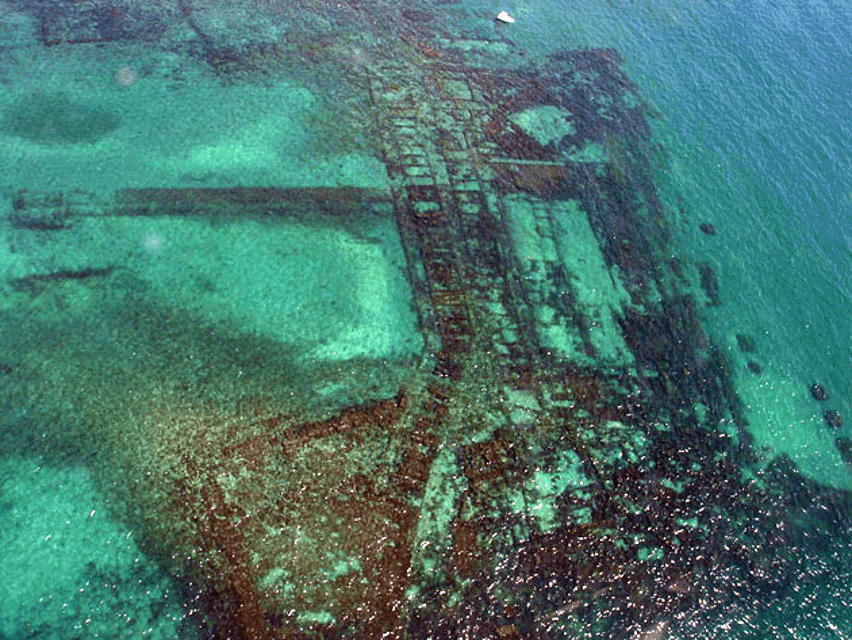
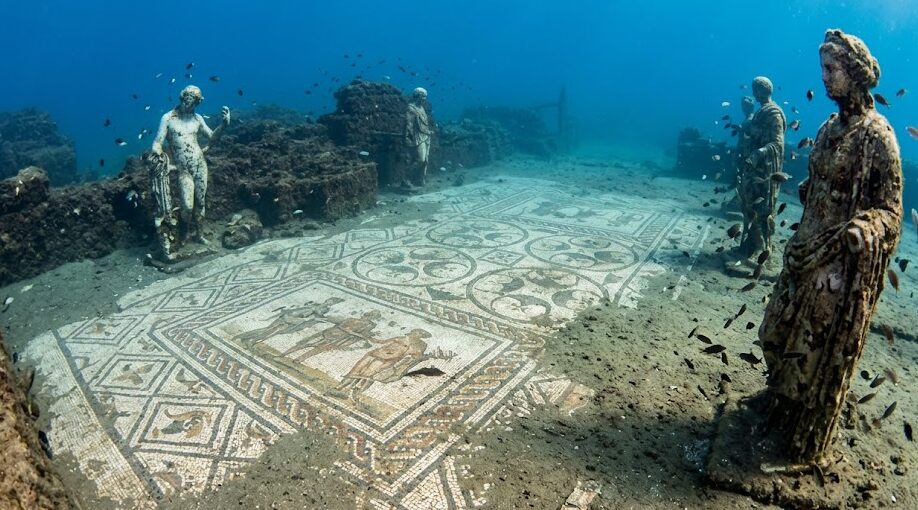
The marble floors of the Villa dei Pisoni lie three meters underwater, paved in geometric mosaics that ripple under the surface when the morning light is right. Why is Baiae underwater begins with the Campi Flegrei caldera, a volcanic system whose magma chambers rise and fall over centuries, lifting and lowering the ground above them. The phenomenon is called bradyseism, from the Greek for "slow earthquake," and it has reshaped the coastline of the Bay of Naples for millennia. During the height of the Roman Empire, Baiae sat at sea level, a resort favored by emperors and senators who built villas along the thermal springs. Pliny the Elder recorded the hot baths. Seneca complained about the noise. But the land was already subsiding. Archaeological evidence shows that by the fourth century, parts of the harbor district had slipped below the waterline. The process accelerated in the medieval period as volcanic activity beneath the caldera intensified. By the Renaissance, the city was a memory, its streets and porticoes submerged. The submerged site spans roughly 177 hectares. The ruins rest between 2 and 8 meters deep, shallow enough for snorkelers but deep enough to preserve floor plans, statue bases, and column stumps from wave action. The Parco Archeologico Sommerso di Baia protects the area. Divers and snorkelers follow marked routes over the remains of the Villa Protiro, the Nymphaeum of Punta dell'Epitaffio, and the thermal complex known as the Terme di Lacus. Visibility depends on tides and seasonal plankton blooms. Morning dives between April and October offer the clearest water. Bradyseism continues. Ground-level monitoring stations around Pozzuoli record centimeter-scale shifts each year, sometimes upward, sometimes down. The ruins will not rise again, but the Campi Flegrei remains active, and the coastline is still moving. Understanding why Baiae went underwater is not just a historical question—it is a geological one, written in the same volcanic forces that still shape the region today.

“The land was already subsiding during the Roman Empire, and by the Renaissance, the city was a memory beneath the waves.”
History

Why Is Baiae Underwater: The Geological Story of Bradyseism

The question of why is Baiae underwater begins with bradyseism, a volcanic phenomenon unique to the Campi Flegrei caldera. This slow vertical movement of the Earth's crust, driven by magma chamber pressure and hydrothermal activity beneath Pozzuoli Bay, has shaped the coastline for millennia. Roman engineers recognized Baiae's thermal springs and sheltered harbor in the 2nd century BCE, constructing villas, bathhouses, and temples along the waterfront. The emperors Augustus, Nero, and Hadrian maintained residences here, drawn by the therapeutic waters and political discretion the resort town offered. By the 3rd century CE, bradyseismic subsidence had begun its inexorable work. Coastal structures built at sea level during the Republic period gradually descended as the ground beneath them sank at rates averaging two centimeters per year. The Serapeum of Pozzuoli, three kilometers north, records this motion in its columns, where marine borings mark former water levels. Baiae suffered the same fate. The nymphaeum of Punta Epitaffio, once an elevated garden pavilion, now rests eight meters below the surface. Successive phases of subsidence between the 4th and 16th centuries submerged the porticus, the Villa dei Pisoni's mosaic floors, and the Temple of Venus. Archaeological surveys conducted since 1956 have mapped these ruins across twelve hectares of seabed. Divers and snorkelers today navigate streets paved with basalt blocks, peer into the remains of bath complexes with intact hypocaust systems, and trace the foundations of imperial reception halls. The bradyseism that sank Baiae continues; monitoring stations record ongoing fluctuations as the caldera breathes beneath the bay. What visitors see is not a static archaeological site but a living geological process, preserving Roman architecture in the cold water while the earth beneath it slowly rises and falls.

2nd century BCE

Roman patricians establish Baiae as a thermal resort, constructing the first bathhouses along the volcanic coastline.

1st century CE

Emperors Augustus, Tiberius, and Nero build imperial villas, transforming Baiae into the most exclusive retreat on the Bay of Naples.

3rd–4th century CE

Bradyseismic subsidence accelerates, submerging coastal structures as the Campi Flegrei caldera floor sinks beneath sea level.

8th century CE

Saracen raids and continued land subsidence force abandonment of the lower town; remaining population retreats inland to higher ground.

16th century

Final major subsidence event submerges the porticus and remaining waterfront architecture, leaving only the upper thermal baths visible above water.

1956

Raimondo Bucher conducts the first systematic underwater survey, mapping Roman roads and villa foundations on the seabed.

2002

Italy establishes the Parco Archeologico Sommerso di Baia, opening the submerged ruins to guided snorkeling and diving tours.

Timing

Best Time to See Why Is Baiae Underwater

The optimal time to observe the submerged structures is during the shoulder months of spring and autumn, specifically during the early morning hours. Clear morning water conditions provide the best visibility for viewing submerged Roman ruins.

Weekday mornings

Minimal crowds

These slots offer the quietest experience and calmer surface water for snorkeling.

May to June

Moderate crowds

Warm 22-25°C water

Extended daylight allows for more thorough exploration of the underwater sites.

July to August

High crowds

Hot 26-28°C water

Water visibility can sometimes decrease due to increased marine activity and peak temperatures.

September to October

Low to moderate

Mild 20-23°C water

The sea remains warm from summer, while the air temperature becomes more comfortable for post-activity transitions.

Verdict: For the highest probability of clear visibility, visit Tuesday to Thursday between 08:30–16:30 during the months of May or September.

What to see

What Remains: Key Ruins Explaining Why Is Baiae Underwater

The submerged archaeological park preserves the remnants of an elite Roman resort, now resting on the seafloor due to bradyseism. Divers and snorkelers can observe the structural remains of grand villas and public spaces that were once the center of imperial life.

Nymphaeum of Punta Epitaffio

Nymphaeum of Punta Epitaffio

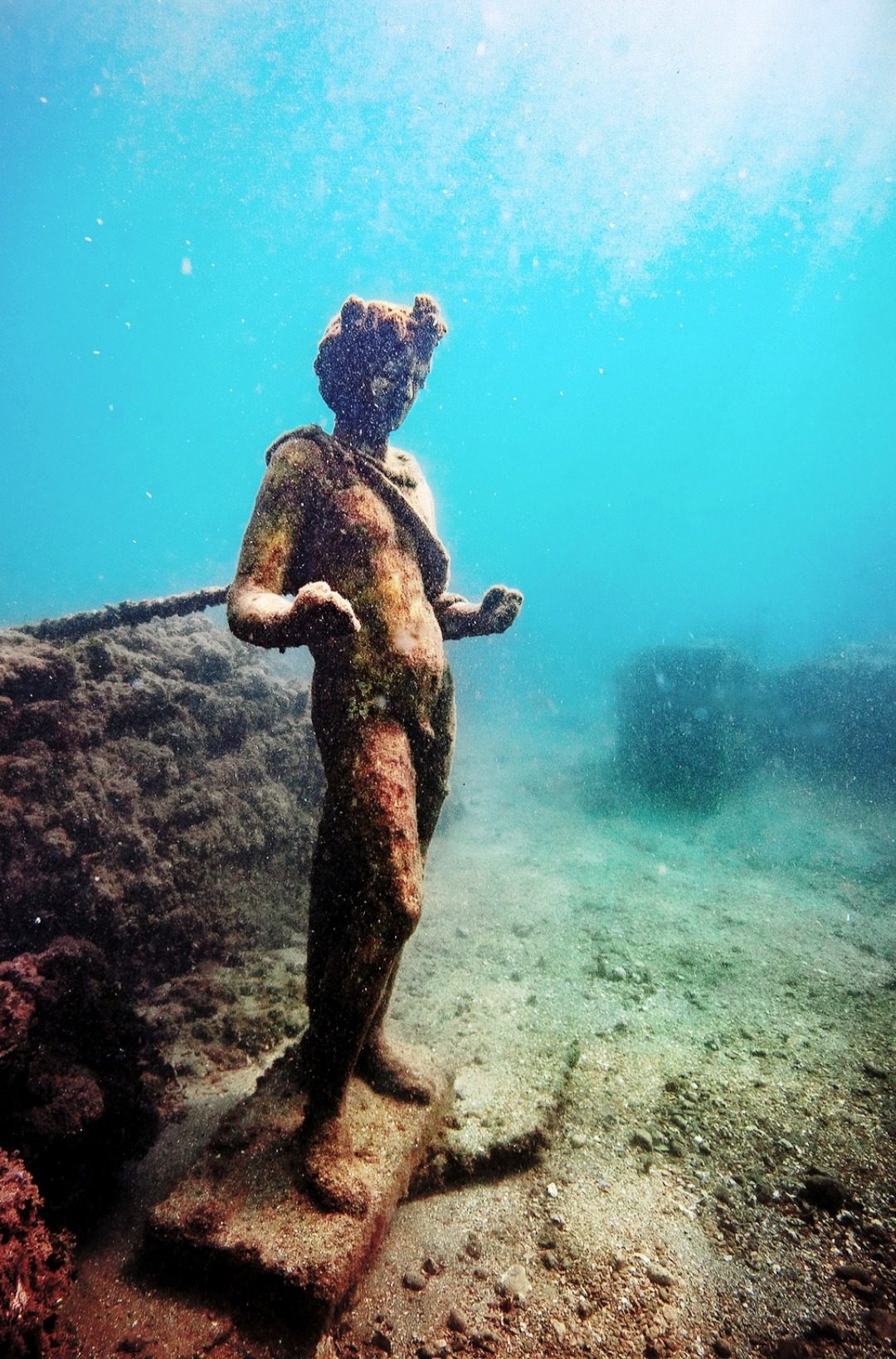
This grand banquet hall features replica statues arranged in an apse, illustrating the luxury of Emperor Claudius's era. The original marble sculptures are housed in the nearby museum.

Look closely at the statue bases for original architectural details.
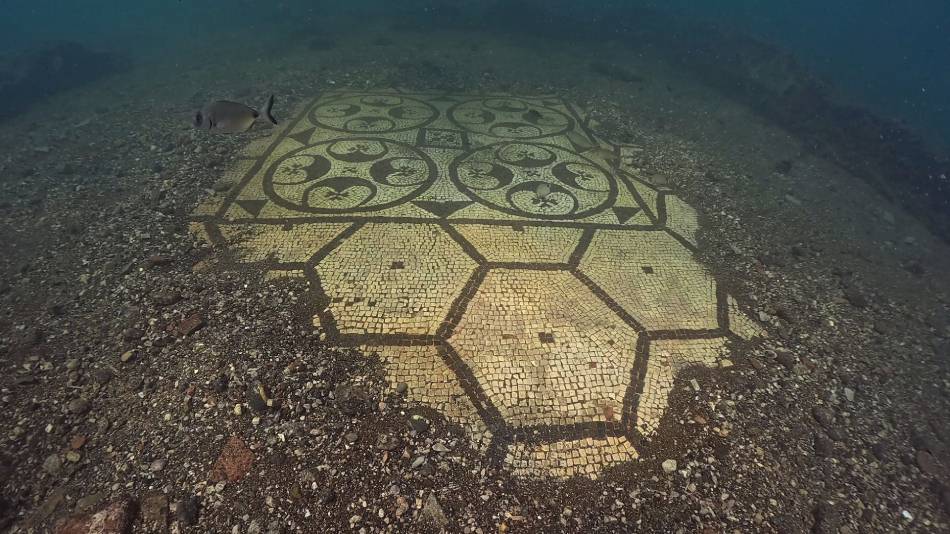
Villa a Protiro

Villa a Protiro

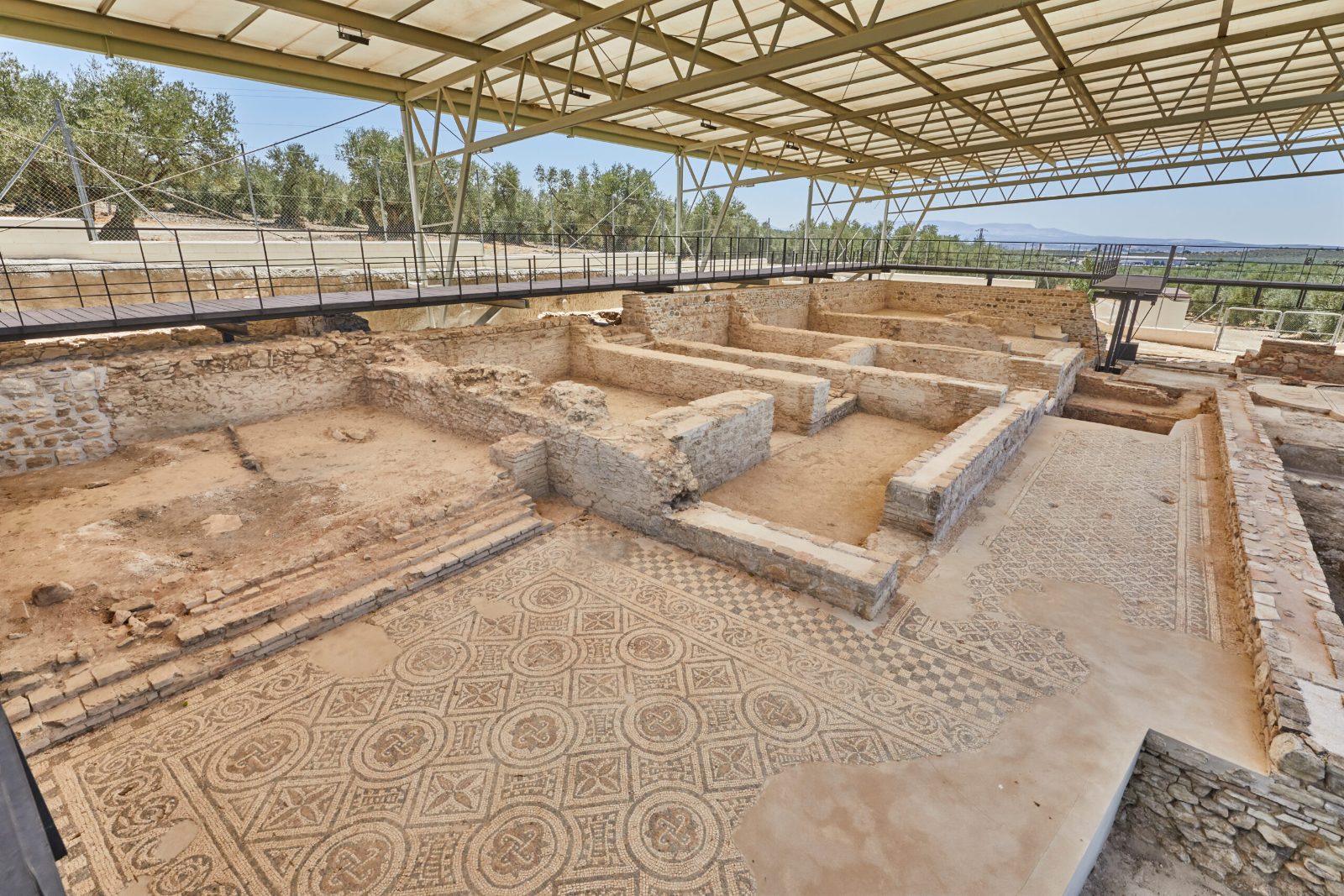
This villa is renowned for its well-preserved black and white geometric mosaic floors. The layout reveals the domestic architecture of wealthy Roman seaside residences.

Follow the lead of the guide to spot mosaic patterns.

Piso's Villa

Piso's Villa

The residence of the Calpurnius Piso family includes substantial brick walls and thermal bath complexes. These structures demonstrate the sophisticated engineering used to harness natural hot springs.

Observe the water level marks on the ancient walls.

Portus Julius

Portus Julius

This area marks the remains of the commercial harbor infrastructure. The submerged stone piers and breakwaters provide evidence of the city's maritime logistics.

Look for large rectangular blocks marking the ancient coastline.

Prices

Entrance Fees for Viewing Why Is Baiae Underwater

Access to the Parco Archeologico Sommerso di Baia requires payment of an official conservation fee. These fees vary depending on whether you are snorkeling or diving within the protected marine area.

Diving Conservation Fee Per person per dive entry
5 EUR
Snorkeling Conservation Fee Per person per snorkeling entry
3 EUR

Verdict: An adult visitor typically pays between 3 EUR and 5 EUR, depending solely on the chosen activity of snorkeling or diving.

Opening hours

Operating Hours for Why Is Baiae Underwater

The Parco Archeologico Sommerso di Baia maintains a consistent weekly schedule, remaining closed on Mondays and operating throughout the remainder of the week.

Monday
Closed
Tuesday
08:30–17:30
Wednesday
08:30–17:30
Thursday
08:30–17:30
Friday
08:30–17:30
Saturday
08:30–17:30
Sunday
08:30–17:30
Visitors should plan their arrival within the 08:30–16:30 window to ensure adequate time for viewing the submerged site.
Directions

Getting to the Site of Why Is Baiae Underwater

The Sunken City of Baia is located in Bacoli, near Pozzuoli. Visitors typically access the site by traveling to the address at Via Miliscola, 165, 80078 Pozzuoli NA, Italy.

Train 45 min from Naples

Cumana line to Lucrino station

Car 30-40 min from Naples

Tangenziale di Napoli toward Pozzuoli/Bacoli

Taxi 30-50 min from Naples Variable

Direct transfer to Via Miliscola, 165

For the best conditions to view the submerged ruins, plan to arrive within the best arrival window of 08:30–16:30. Clear morning water often provides higher visibility for snorkeling activities.

Book

Check availability

Frequently asked

Common questions about why is baiae underwater

Everything you need to know about why is baiae underwater

Why is Baiae underwater?

The city of Baiae is submerged due to bradyseism, a volcanic phenomenon involving the gradual rise and fall of the Earth's crust. This geological process, characteristic of the Phlegraean Fields, caused the land to slowly subside over centuries, eventually pulling the coastal structures into the sea. Understanding why is baiae underwater requires looking at the intense geothermal activity that defines this region of Italy. These seismic shifts eventually left significant Roman villas, mosaics, and thermal baths beneath the waves.

Keep reading

More guides & pages