4 hr
Baia Sunken City Snorkeling Tour
Swim above submerged Roman villas and ancient mosaics in this unique underwater archaeological adventure
Reserve
Swim above imperial palaces and mosaic floors, two millennia beneath the waves
Hand-picked by our editors — only the best 4 snorkeling experiences from 12 reviewed
Verified partners for Sunken City of Baia Snorkeling tours, free cancellation where available, and instant confirmation on every booking.
4 hr
Swim above submerged Roman villas and ancient mosaics in this unique underwater archaeological adventure
Reserve
50 min
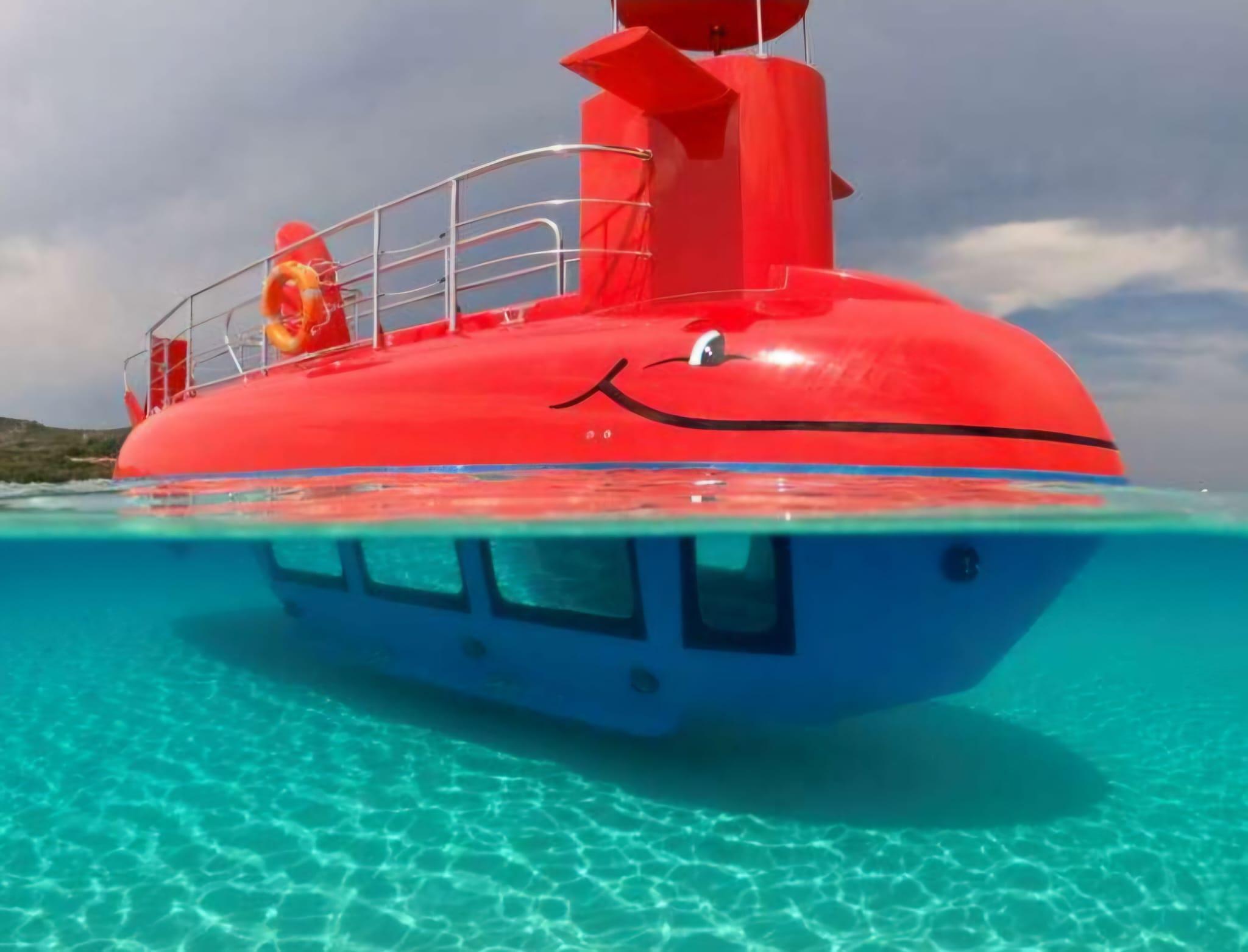
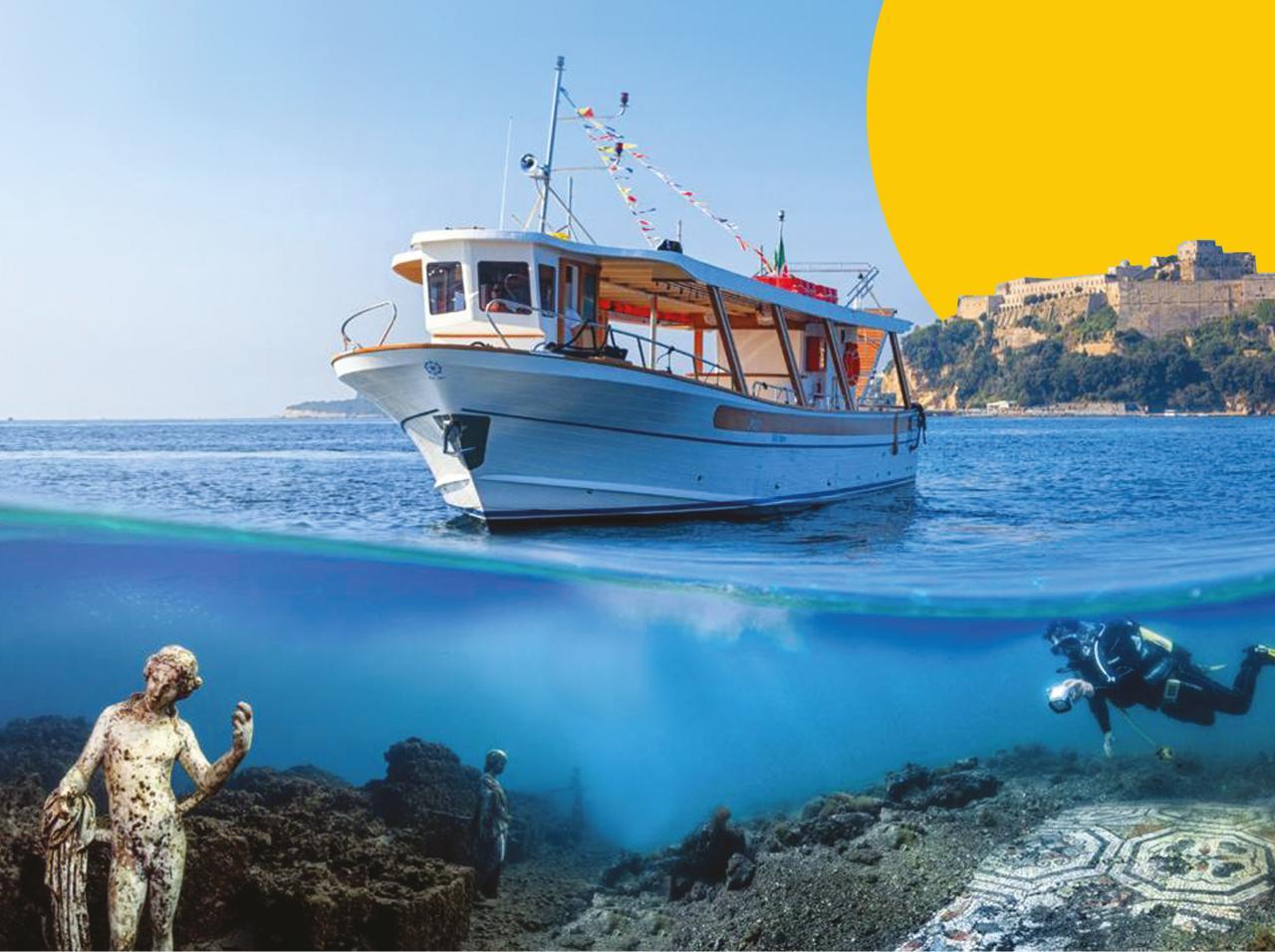
Explore submerged Roman ruins through panoramic windows aboard Europe's only semi-submarine vessel
Reserve
4 hr
Explore an ancient sunken Roman settlement with mosaics, statues, and villa ruins just beneath the waves
ReservePrices from verified partners. Availability updates in real time at checkout. Free cancellation policies apply where shown.
Every Sunken City of Baia Snorkeling tour side-by-side — duration, what's included, how you redeem.
| Experience | Duration | Rating | Guide | Small group | Free cancel. | Price | |
|---|---|---|---|---|---|---|---|
|
Standard Entry Most popular
Baia Sunken City Snorkeling Tour
|
4 hr | ★ 4.8 | ✓ | — | ✓ | €35 | Book → |
|
Standard Entry
Baia Semi-Submarine Underwater City Experience
|
50 min | ★ 4.6 | ✓ | ✓ | ✓ | $34 | Book → |
|
Standard Entry
Scuba Diving Adventure in Baia's Submerged Roman City
|
4 hr | ★ 5.0 | — | — | ✓ | €45 | Book → |
All prices from verified partners. Availability and exact terms confirmed at checkout.
Snorkeling provides a relaxed look at the submerged Roman maritime villas, while scuba diving offers a more immersive encounter with the archaeological park. Most visitors find that choosing between the two depends on whether they prioritize ease of use or proximity to the seabed.
| Feature | Top pick Snorkeling | Scuba Diving |
|---|---|---|
Perspective of ruins |
Surface level view | |
Equipment requirements |
Mask, snorkel, fins | |
Certification needed |
None | |
Access to deeper structures |
Limited to surface | |
Proximity to artifacts |
Distanced from seabed | |
Duration of exploration |
1–2 hours | |
| See tickets → |
Verdict: Those seeking sunken city of baia snorkeling tours often prefer the accessibility of surface swimming, whereas divers requiring sunken city of baia snorkeling tickets for deeper, closer exploration choose scuba for the detailed, up-close engagement with the mosaics, though a sunken city of baia snorkeling tour remains the most convenient option for casual observers.
Choose your ticket, select your date, and reserve in under two minutes. Secure checkout handled by our verified partner.
Instant confirmation by email, with a mobile voucher you can save offline. No printing, no queuing at a collection desk.
Arrive at the entrance, show your voucher on your phone, and walk in. Most tickets include priority or skip-the-line access.
Practical details for Sunken City of Baia Snorkeling tickets straight from our verified partners — hours, access, rules, and how to get there.
Via Miliscola 165
Confirm location before departure
Open in Google MapsTake the Cumana line to Fusaro station, then walk 10 minutes to the coast.
Follow signs to Bacoli and park near the designated diving center.
Wear swimwear appropriate for snorkeling. Bring extra layers for the boat ride as sea breezes can be cool even during the season.
Keep belongings minimal. Use waterproof dry bags for essentials, as storage space on boats used for sunken city of baia snorkeling is restricted.
Underwater cameras are encouraged to capture the mosaics. Ensure your housing is secure to avoid losing equipment in the marine protected area.
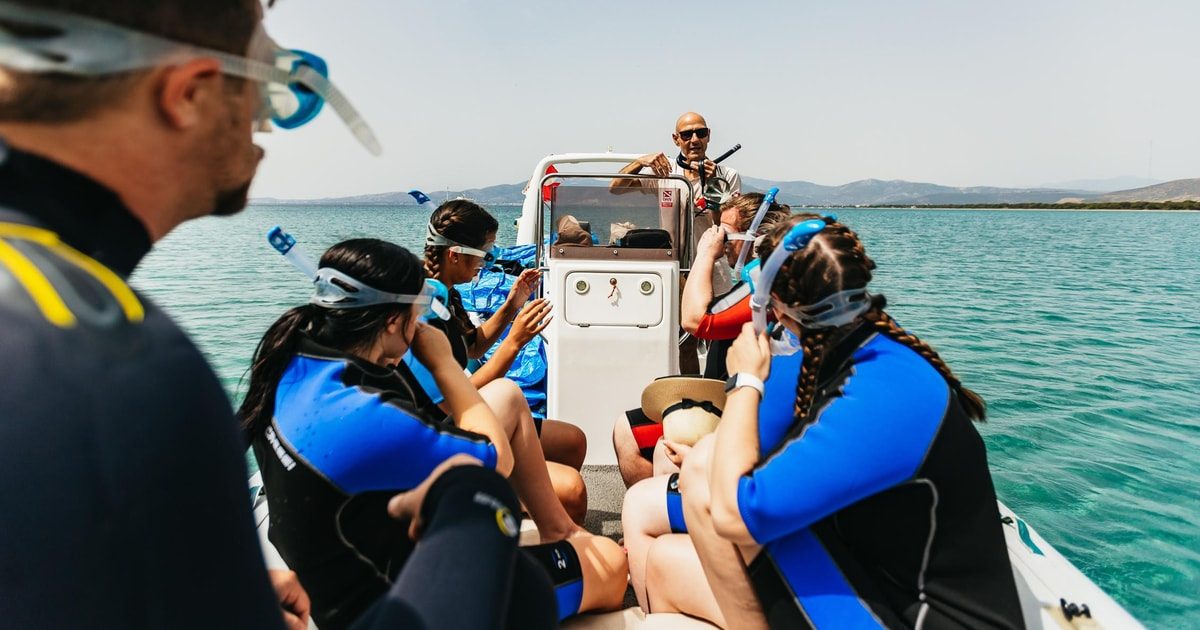
Sunken city of baia snorkeling involves boarding small vessels. Participants must be comfortable transitioning from the boat to the water.
Phones should remain in waterproof cases. Reception can be spotty on the water, so download any required digital tickets beforehand.
The minimum age for the sunken city of baia snorkeling experience is typically seven years. Participants should be confident swimmers to fully enjoy the underwater views.
Bring plenty of fresh water and light snacks. Avoid heavy meals before your sunken city of baia snorkeling tour to prevent motion sickness.
Pets are not permitted on vessels participating in these guided underwater archaeological tours.
Always follow the instructions of your certified guide. They are responsible for uncovering and re-covering mosaics to ensure proper preservation.
Best time to go, insider tips, nearby landmarks, and the cancellation fine print — flip through to skim what matters to you.
How crowds, weather, and events shift across the year.
Mild water temperatures and thinner crowds make this a great window for snorkeling tours.
Warmest weather, though sites are busier; book sunken city of baia snorkeling tickets early.
September and October offer excellent visibility and calm waters for exploring the sunken city.
Water temperatures drop significantly, and park operations are limited or weather-dependent.
Small details that turn a good visit into a great one.
Snorkeling spots are strictly limited to ensure protection of the mosaics.
If the sea is rough, ask about glass-bottom boat alternatives for viewing the ruins.
Never touch or remove any artifacts during your sunken city of baia snorkeling trip.
Space on the boats is limited; bring only the essentials for your tour.
Carry your ID as you may need to present it to park authorities.
Non-bookable sights within a short walk — free to visit, easy to pair.
Features artifacts recovered from the site and panoramic views of the bay.
Extensive land-based ruins of thermal baths and imperial villas.
Essential context for the sunken city of baia snorkeling experience.
Historically significant volcanic lake near the park entrance.
Flexible, no hidden fees.
Full refunds are typically available for sunken city of baia snorkeling tours if cancelled within the operator's specified notice period. Note that the 3 EUR conservation fee may be non-refundable depending on park regulations.
Hand-picked options within walking distance — pick a district for vibe, or a specific hotel for convenience.
Convenient access to all local diving centers.
Vibrant area with many dining options for after your tour.
Ideal for those combining the tour with a wider city visit.
The coastal villas of Baiae sank beneath the Tyrrhenian Sea not by conquest or flood, but by bradyseism — the slow vertical movement of the earth's crust common to the volcanic Campi Flegrei caldera.
Over eighteen centuries, the western shoreline of the ancient resort town subsided by up to eight metres, delivering imperial summer palaces, bath complexes, and marble statuary to the seabed. What remains is the most intact submerged Roman city in the Mediterranean, protected since 2002 as the Parco Sommerso di Baia.
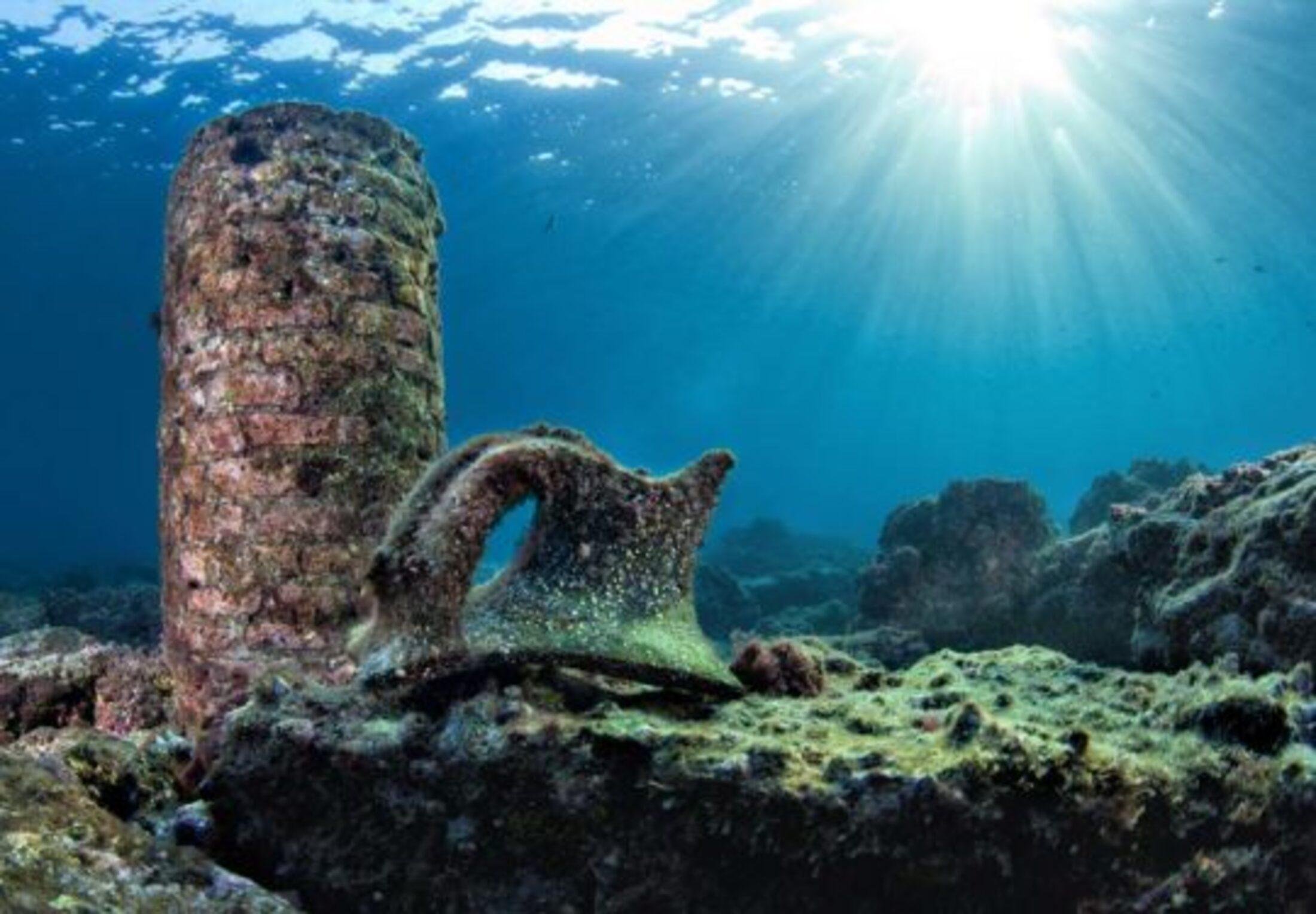
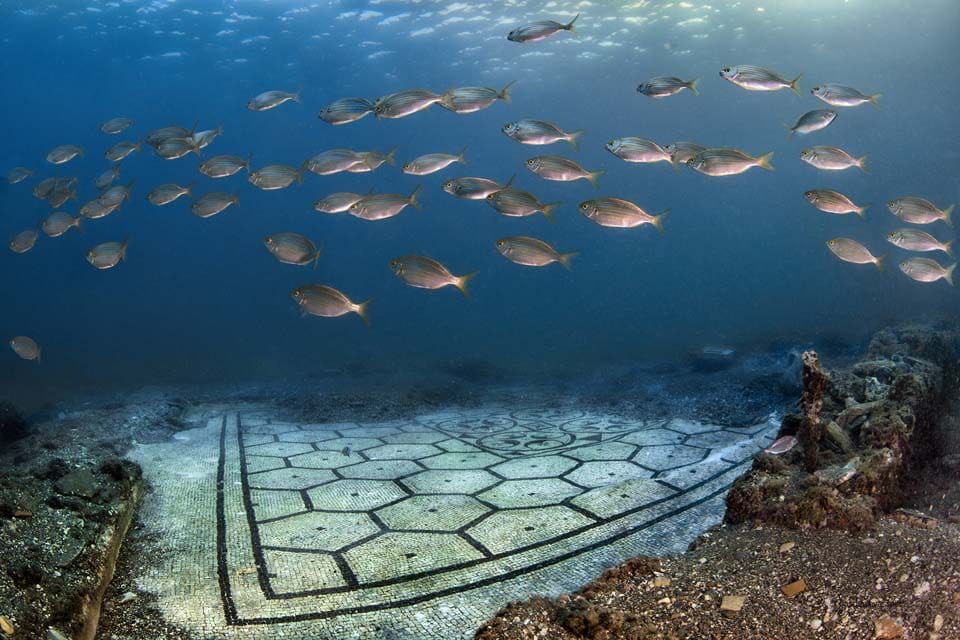
Baiae was the Las Vegas of the late Republic and early Empire. Senators, poets, and emperors — Julius Caesar, Augustus, Nero — built sprawling maritime villas here to exploit the volcanic hot springs that bubble through the bay floor. Pliny the Elder catalogued the opulence; Seneca condemned it. The thermal baths, fed by geothermal vents, were engineering marvels, their caldaria and frigidaria lined with polychrome mosaics now colonised by sea anemones and sponges. When bradyseismic subsidence accelerated in the third and fourth centuries, the western quarters were abandoned room by room. Waves carved through atrium walls. Sand filled the tablinum.
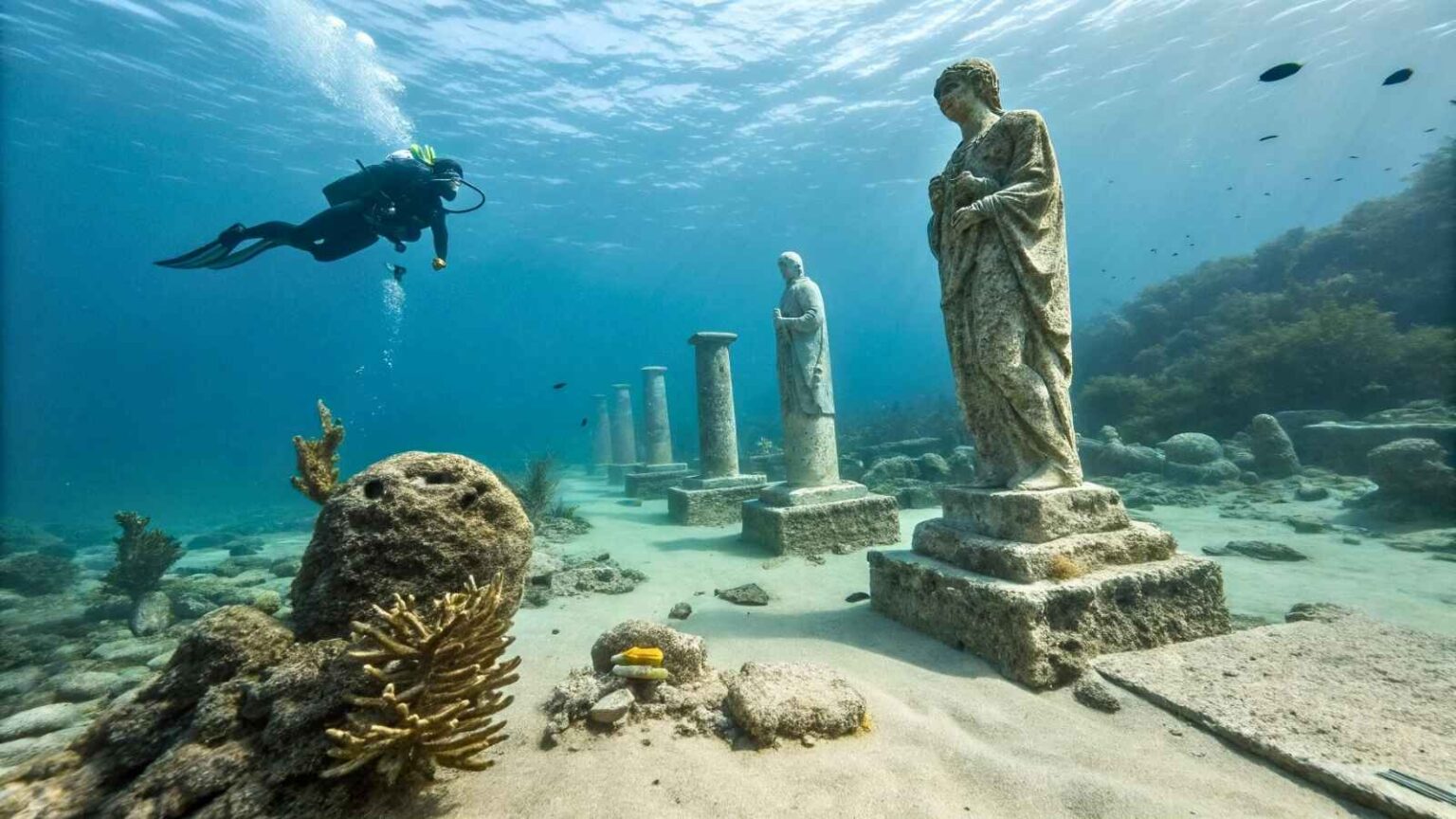
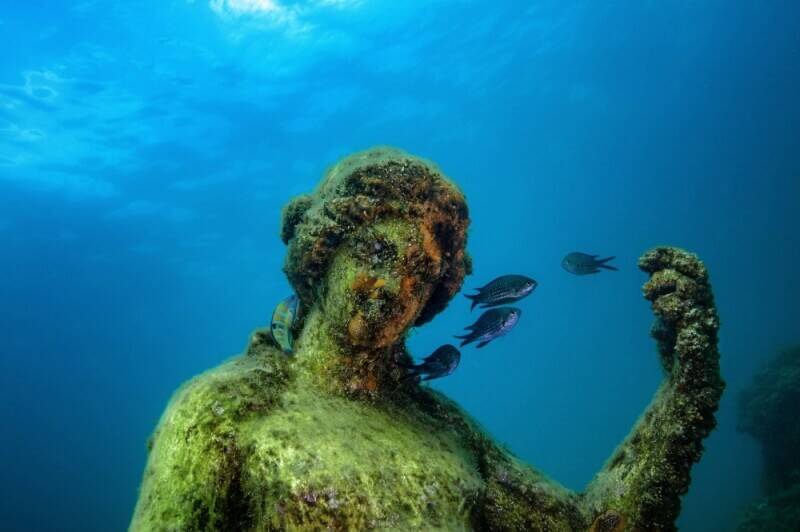
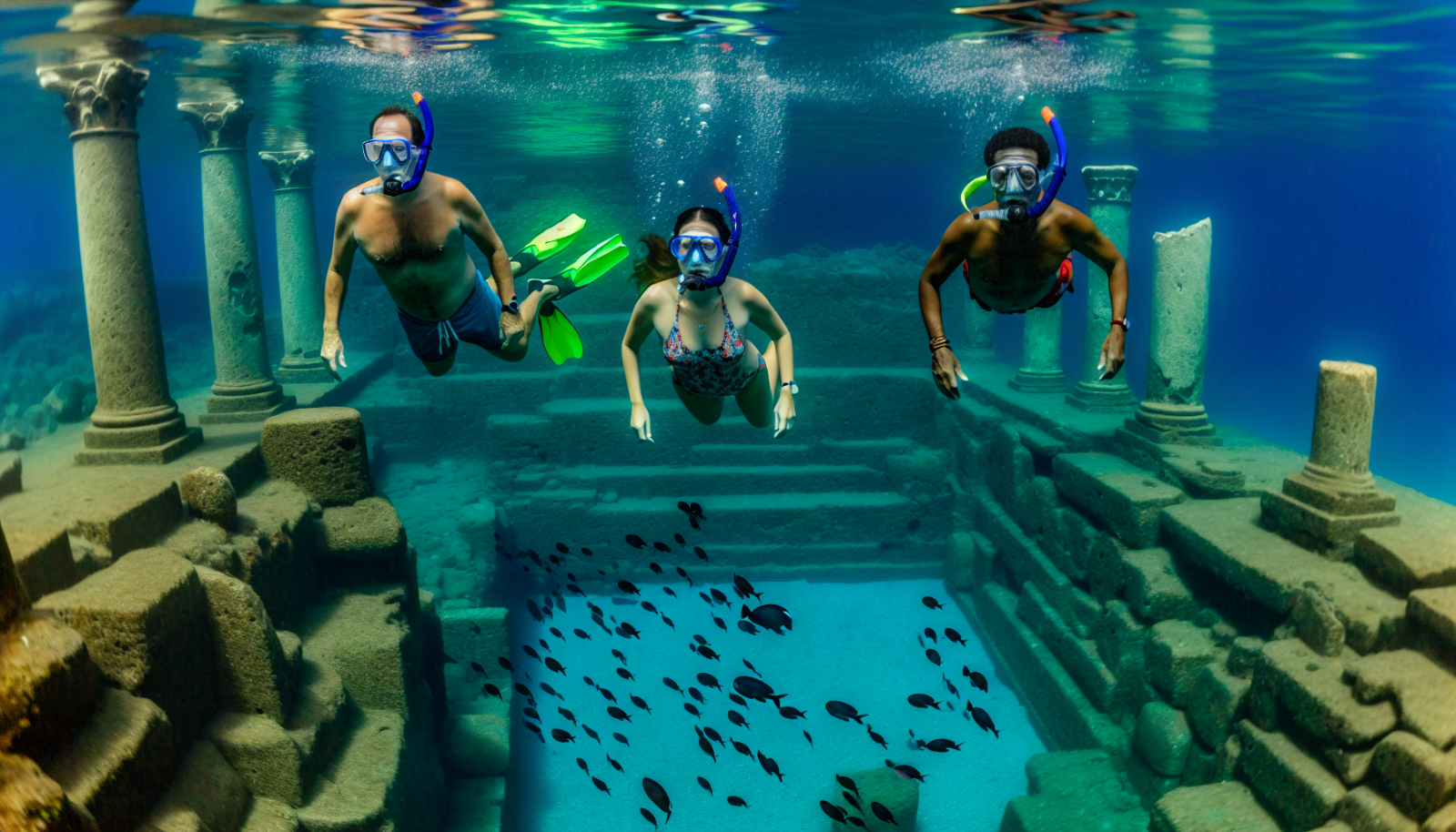
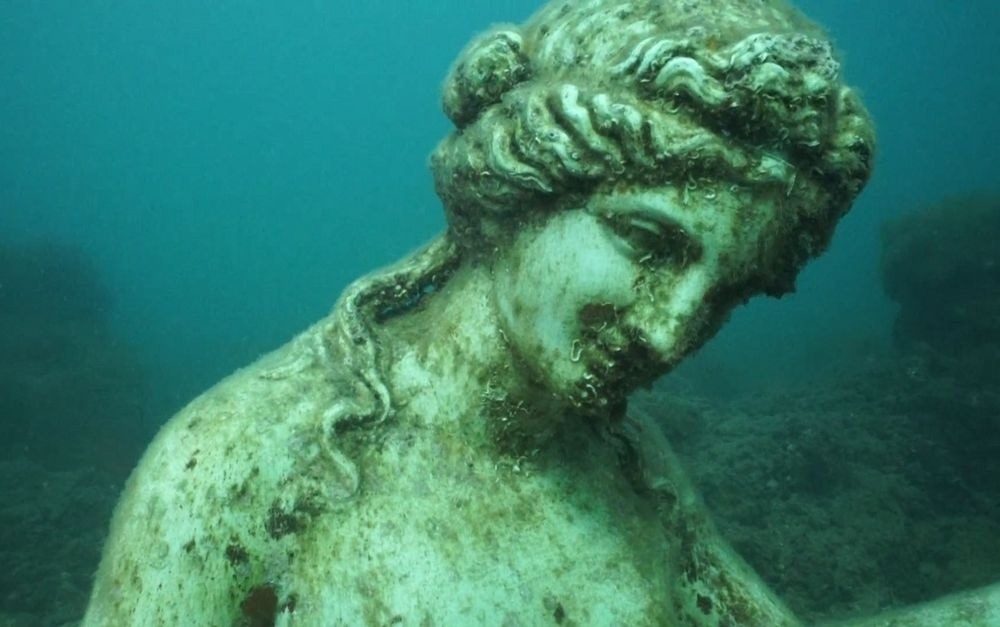
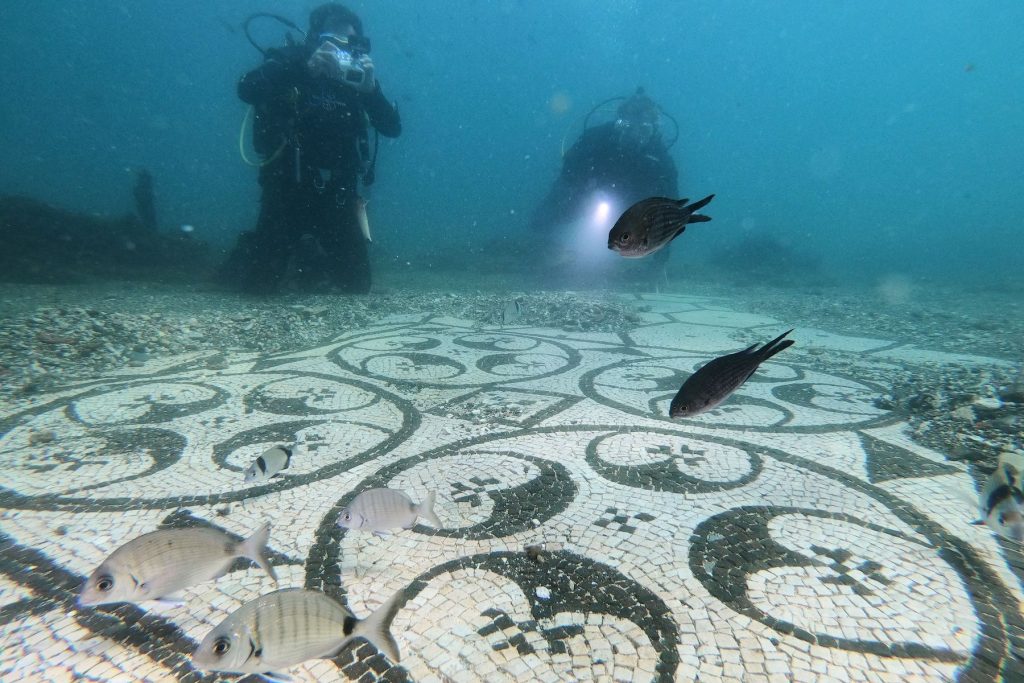
Today the archaeological park encompasses roughly 177 hectares of seabed, five to seven metres below the surface. Snorkelers drift above the Portus Julius harbour works, the Villa dei Pisoni with its peristyle courtyard, and the so-called Nymphaeum of Emperor Claudius, a domed grotto whose statuary — Ulysses, Baius, and sea nymphs — was recovered and replaced with replicas. The originals now rest in the Museo Archeologico dei Campi Flegrei on the Baia promontory. Visibility peaks between May and October, often exceeding twelve metres on calm mornings. Guided snorkeling tours typically launch from the Via Lucullo jetty, routing counterclockwise through the Villa Protiro and the sector known as Portus Julius before returning along the Secca Fumosa volcanic vents.
Conservation efforts since 2018 have stabilised the most fragile mosaic floors with resin netting and installed mooring buoys to prevent anchor drag. The park authority permits only certified operators to lead visits, limiting daily entries to preserve the site's delicate equilibrium between archaeology and marine biology. Sunken city of Baia snorkeling remains one of the few places on Earth where the grandeur of imperial Rome can be witnessed not through reconstruction, but through suspension — columns rising from sand, frescoes fading under algae, history held in salt water.

"The coastal villas of Baiae sank not by conquest or flood, but by bradyseism — the slow vertical movement of the earth's crust."
A step-by-step walkthrough of Sunken City of Baia Snorkeling tickets — what you'll see, how long each stage takes, and the details that matter.
You arrive at the Via Lucullo checkpoint by mid-morning, when the Tyrrhenian is glassy and the sun angle cuts cleanly through the water column.
After a short safety briefing and mask fitting, you wade from the pebble shore into water that is startlingly clear, visibility stretching fifteen metres on a windless September day. Within thirty strokes, the seabed resolves into geometry — stone courses, right angles, the unmistakable grid of a Roman street.
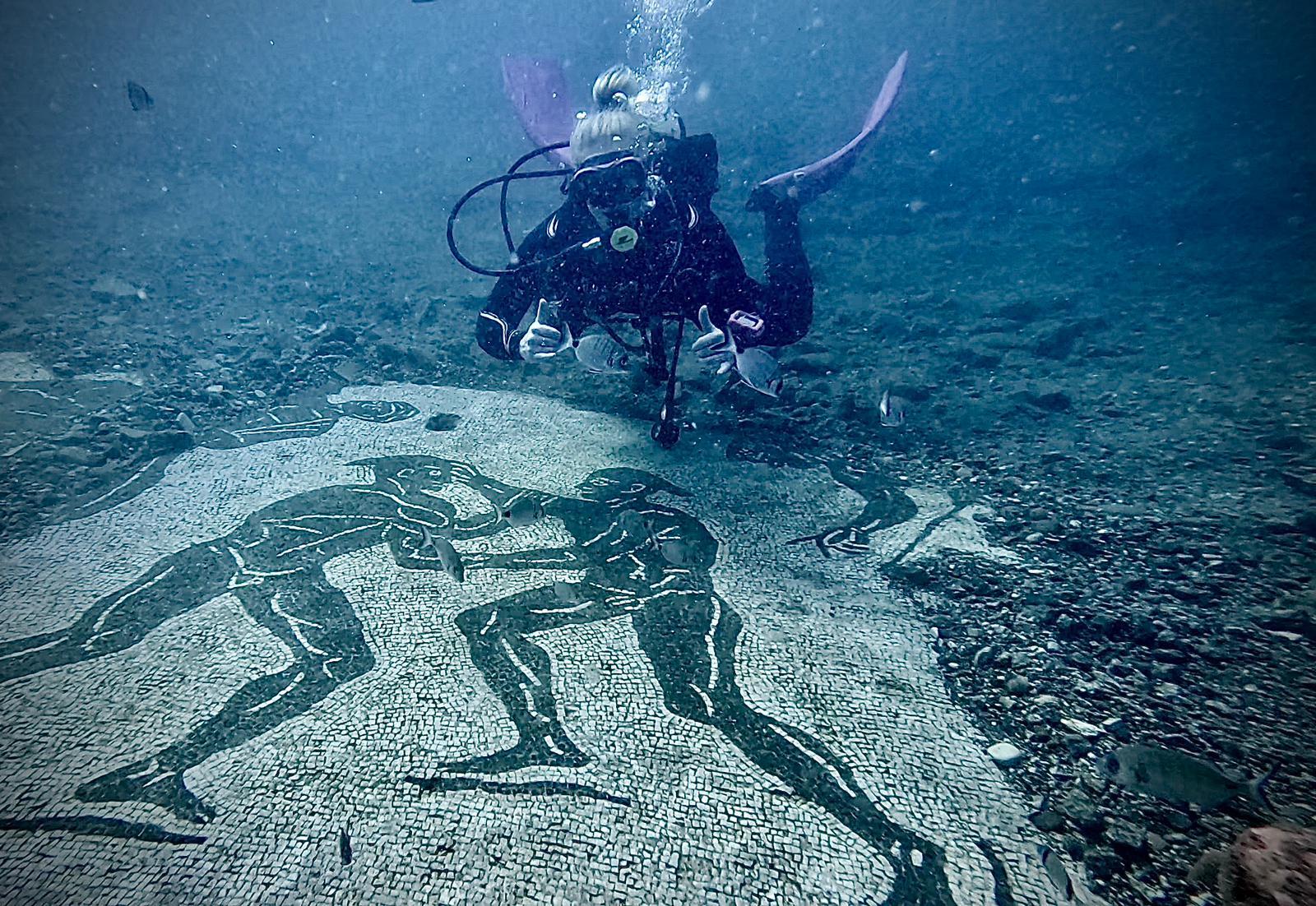
You float above the Villa dei Pisoni, its peristyle courtyard now a kelp garden, columns truncated at two metres. Damselfish dart through what was once a portico. Your guide points down: a black-and-white mosaic floor, tessellated waves still crisp after two thousand years. You breathe slowly through the snorkel, equalising as you duck a metre deeper to see the threshold of a triclinium, its marble sill worn smooth by centuries of current.
The route swings east toward the Nymphaeum. Replica statues — pale limestone figures of Odysseus and his crew — rise from the sand like sentries. Tiny translucent shrimp cluster in the folds of a sculpted toga. You surface, clear your mask, and drift on. Ahead, the Secca Fumosa vents release silver plumes of carbon dioxide, warm against your skin, a reminder that the same volcanic forces that built Baiae continue, incrementally, to reshape it.
The park is open Tuesday to Sunday from 09:00–17:30. It is closed every Monday.
Yes, there is a 3 EUR conservation fee per person required for site access.
No, you do not need a diving license for snorkeling; however, you must be a competent swimmer.
Yes, the minimum age for these tours is usually seven years old.
We recommend booking in advance, especially for the 09:00–11:00 arrival window when visibility is best.
Bring a swimsuit, towel, sunscreen, and a waterproof camera for your sunken city of baia snorkeling excursion.
Storage is limited on the boats, so carry a small dry bag for your belongings.
Most tours meet at a local diving center in Bacoli; check your confirmation for the exact address.
Yes, photography is permitted and encouraged to capture the mosaics.
Tours may be rescheduled or replaced with glass-bottom boat experiences if weather conditions are unsafe.